

TP Link Headquarters
Winner of 2026 WLA Award of Excellence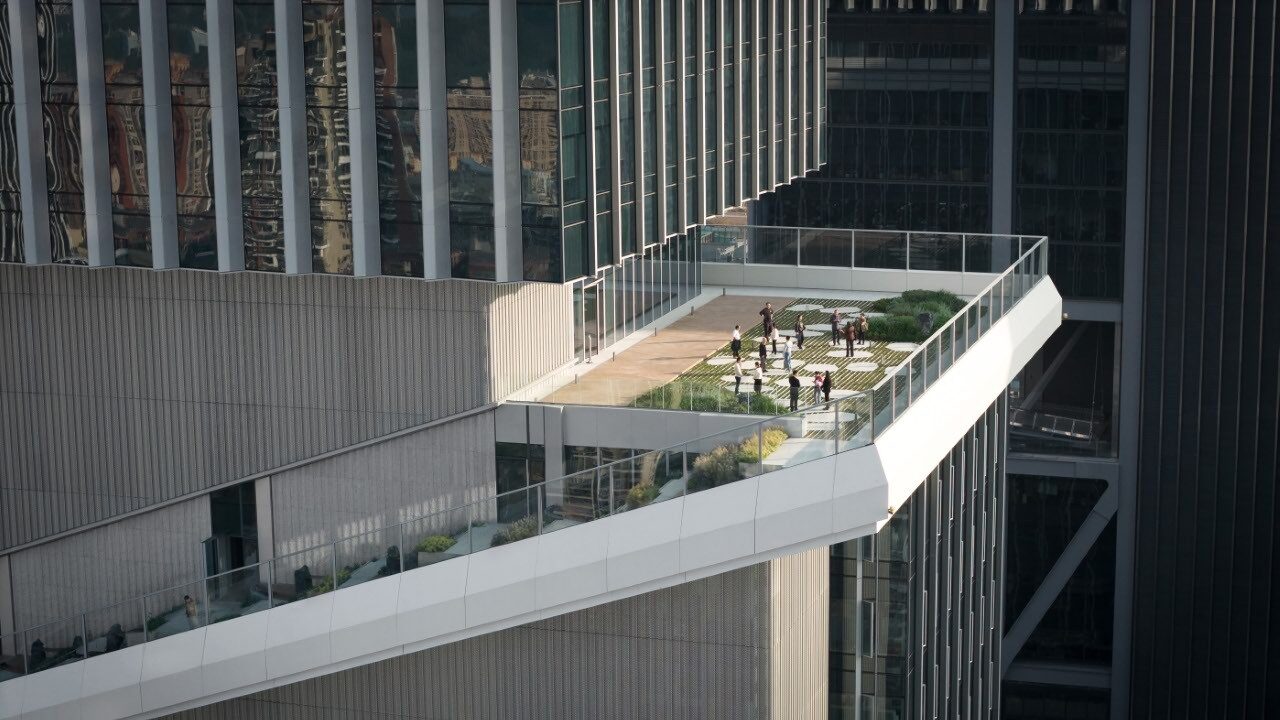




TP Link Headquarters
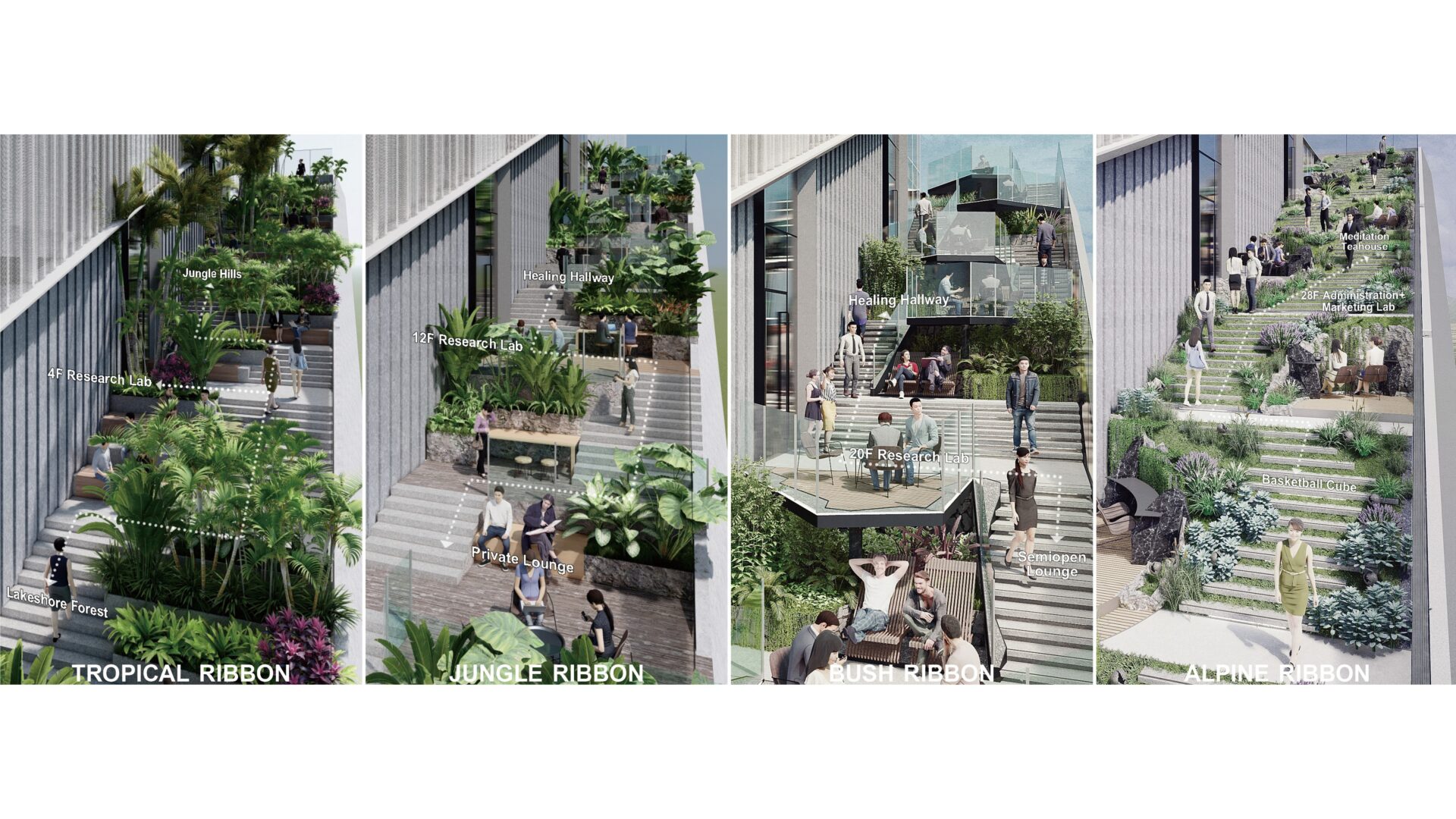
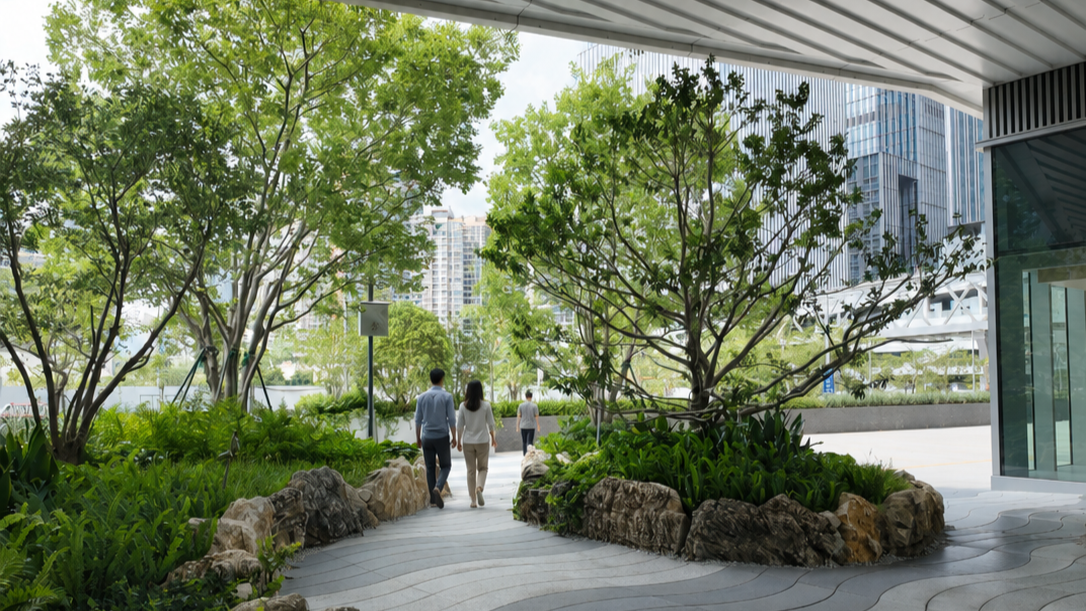
TP-LINK Shenzhen LXD Headquarters reimagines the contemporary workplace as a landscape-led, vertically integrated ecological environment within a dense urban setting. Inspired by “From Coast to Mountain,” the project transforms the headquarters into a climbable green oasis where architecture, ecology, and corporate life are interwoven. More than an elevated garden, it proposes a new typology for high-density workplaces where landscape operates as continuous, inhabitable ecological infrastructure.
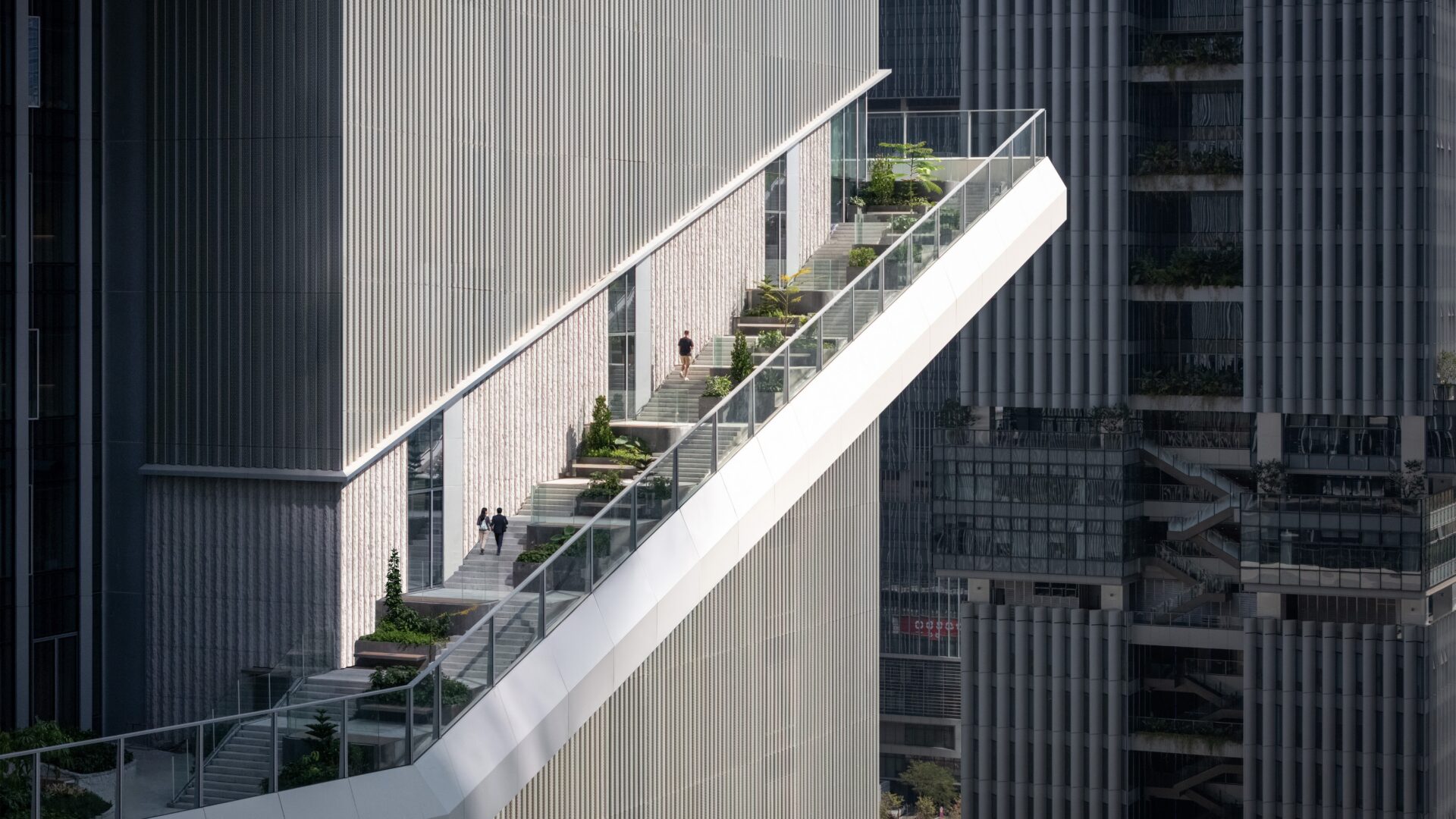
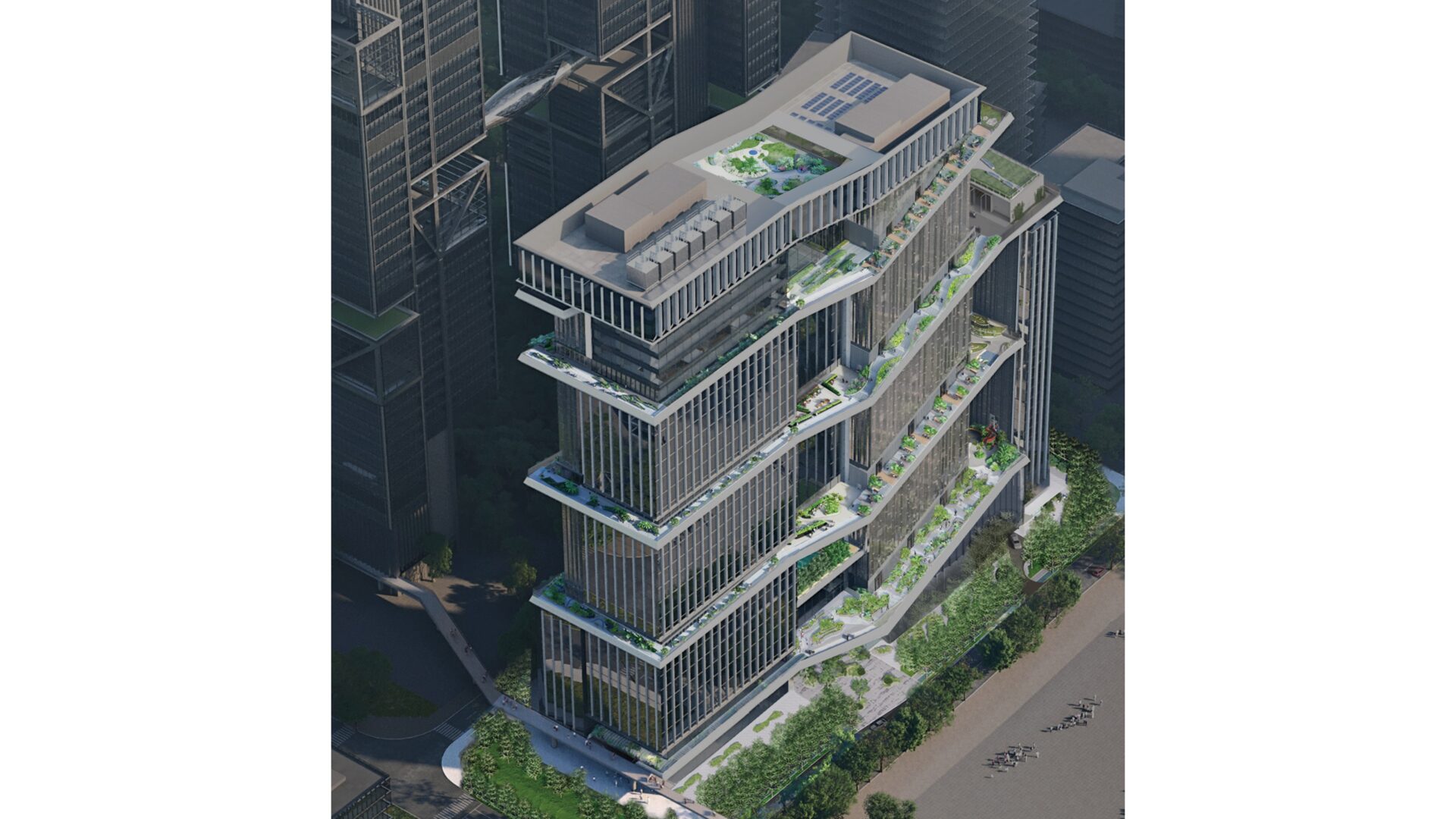
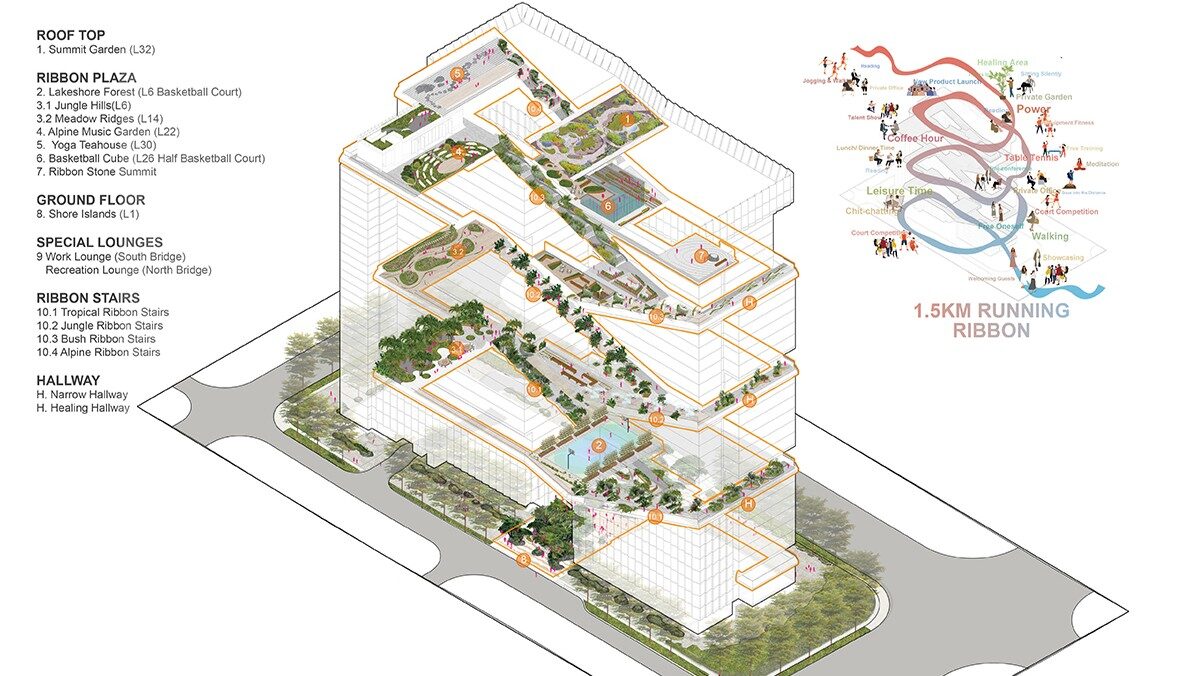
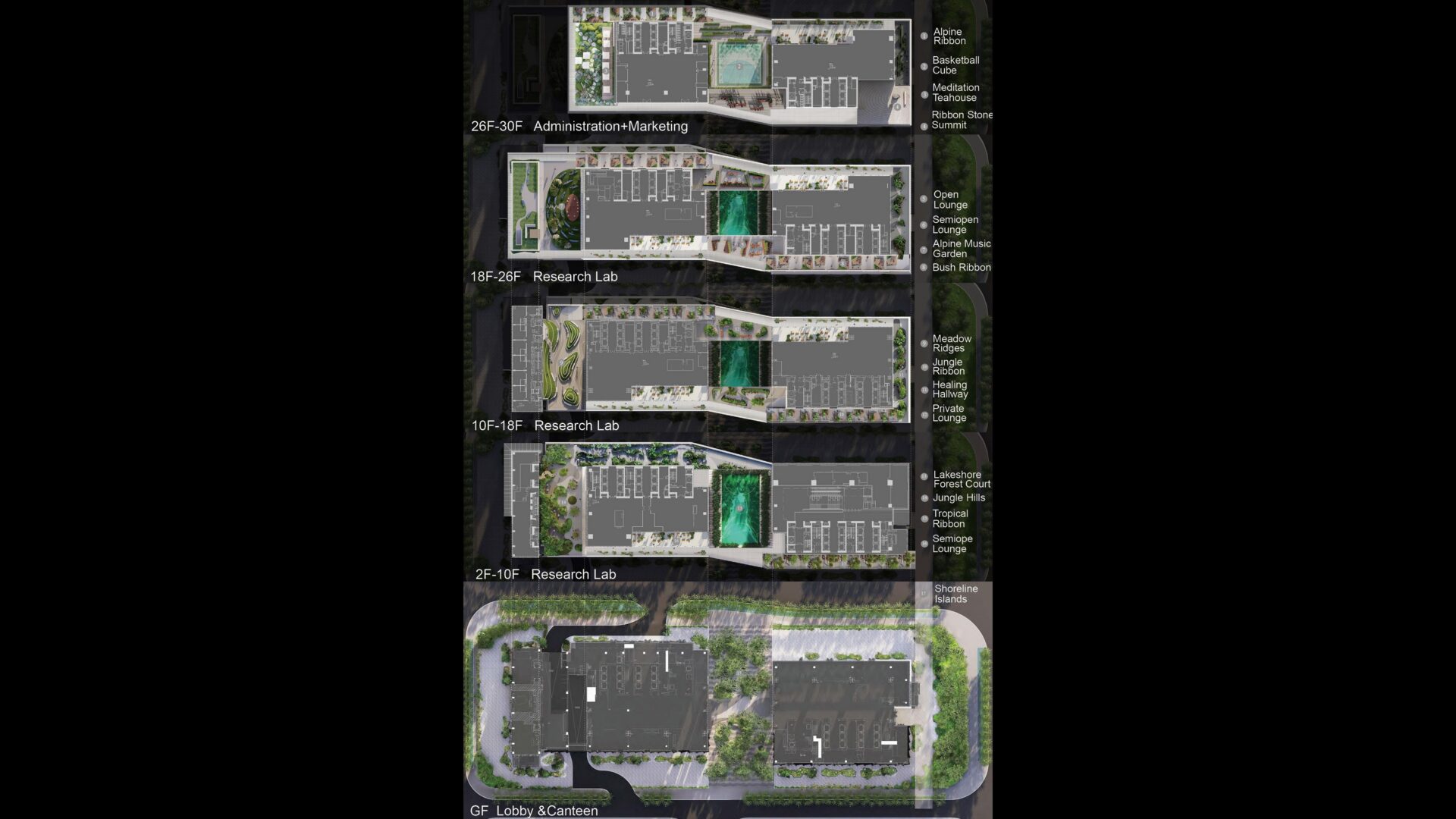
In dense cities, landscape is often reduced to fragmented plazas or isolated rooftop gardens that rarely provide meaningful ecological performance. This project challenges that condition with a 1.5-kilometer ecological ribbon linking three towers into a unified system of circulation, social interaction, and outdoor experience.
Spatial Performance: Maximizing Urban Landscape Land
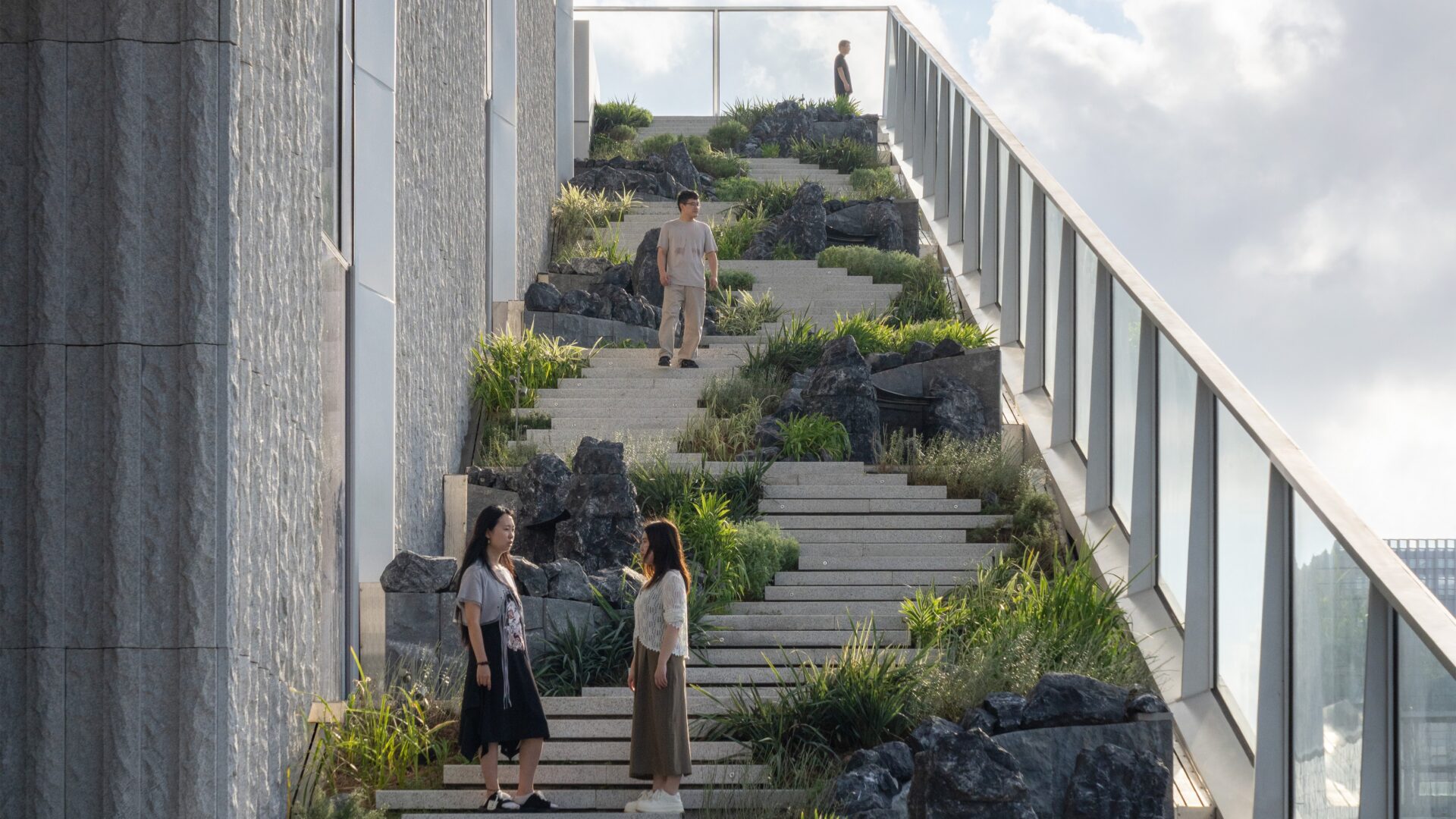
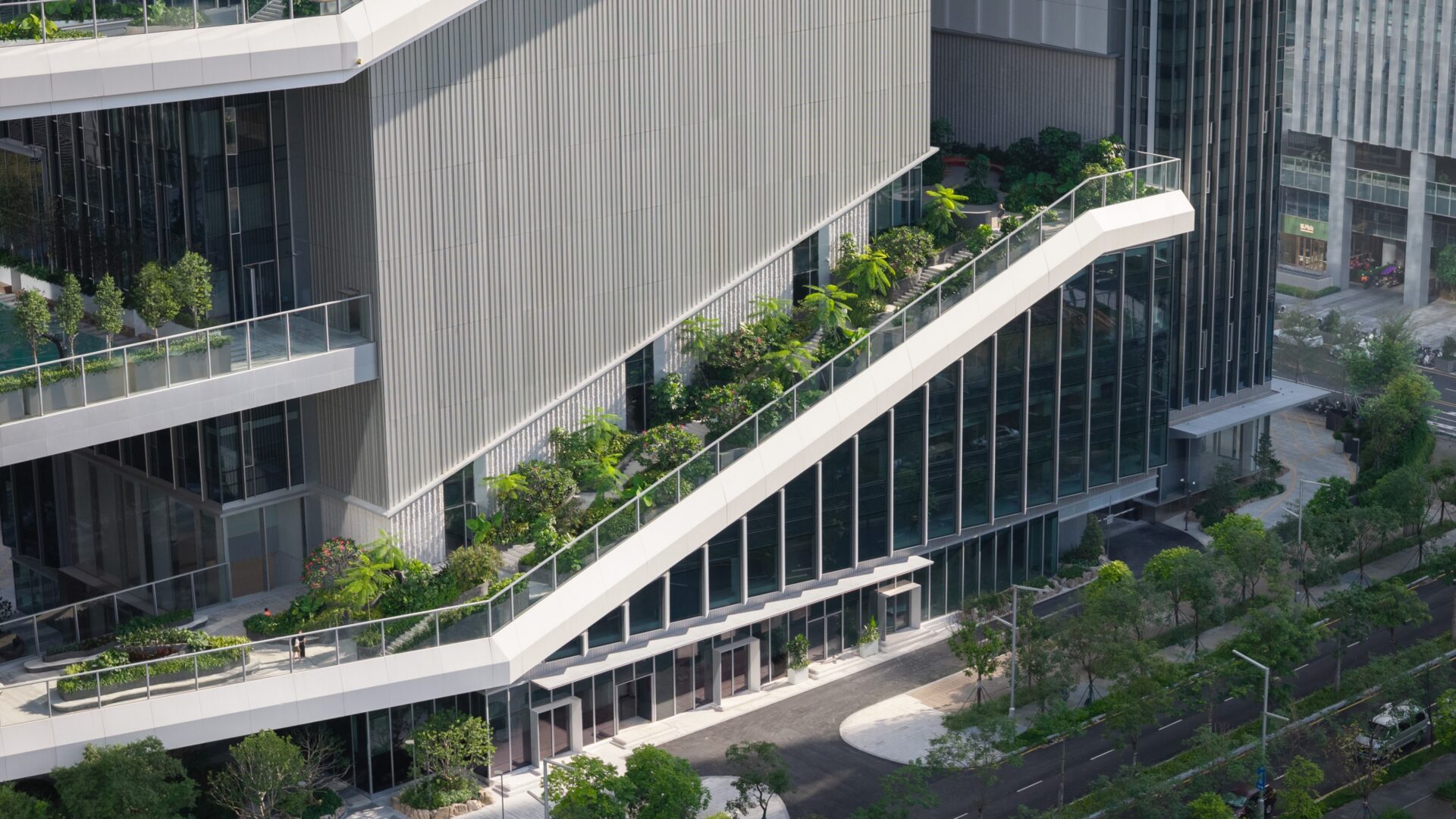
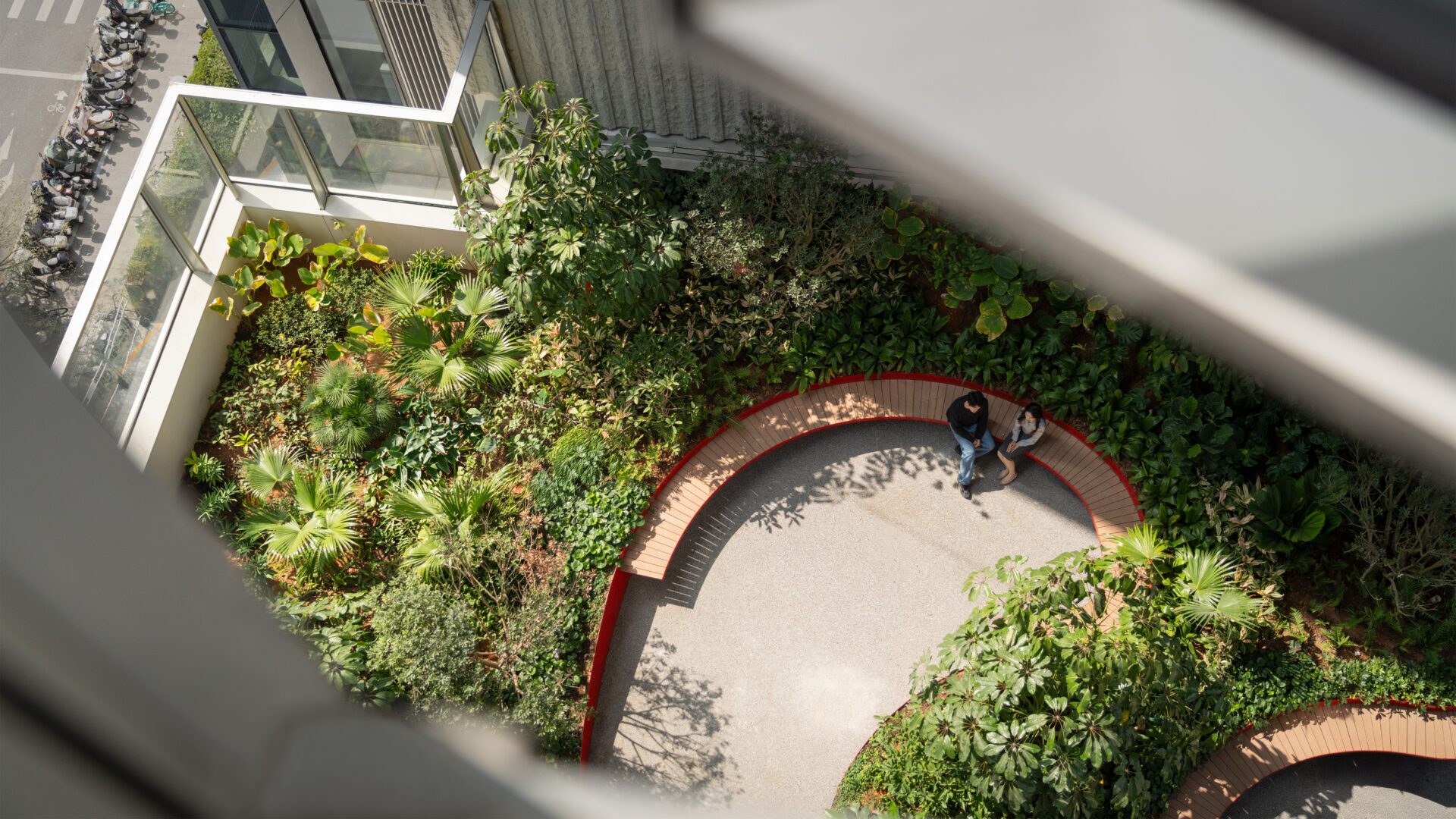
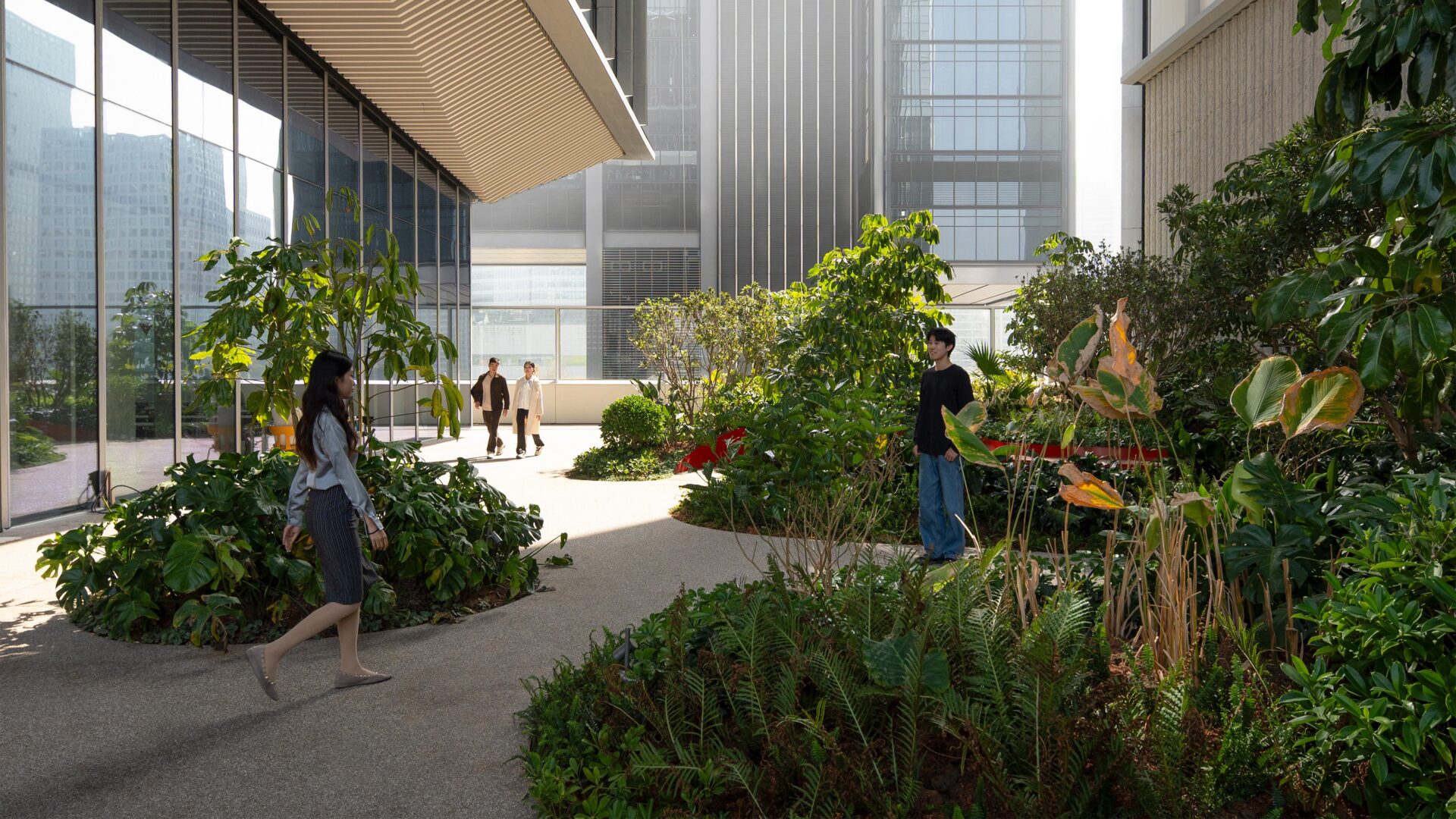
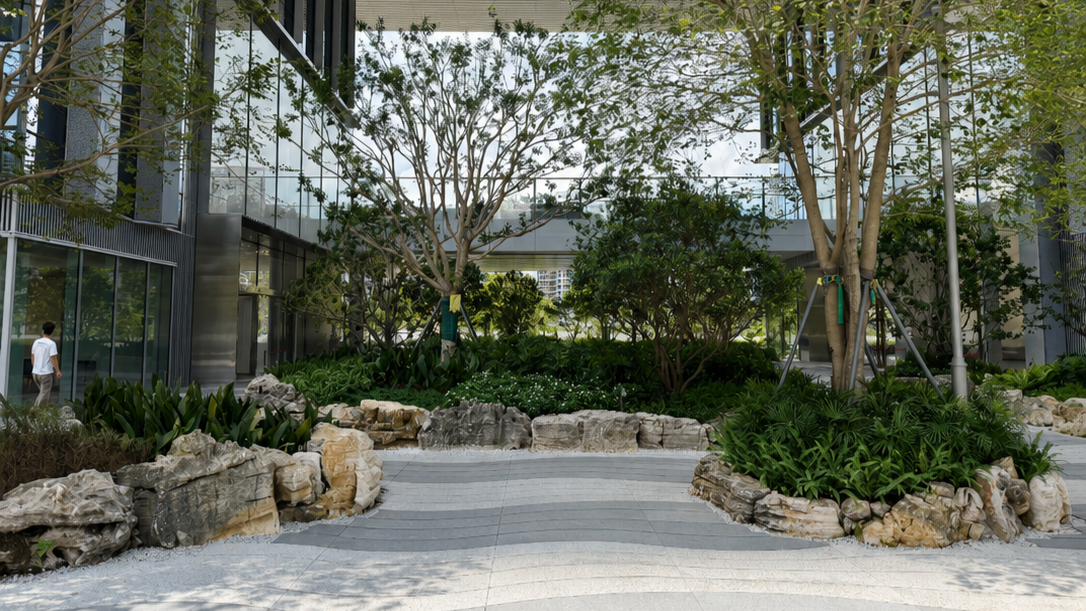
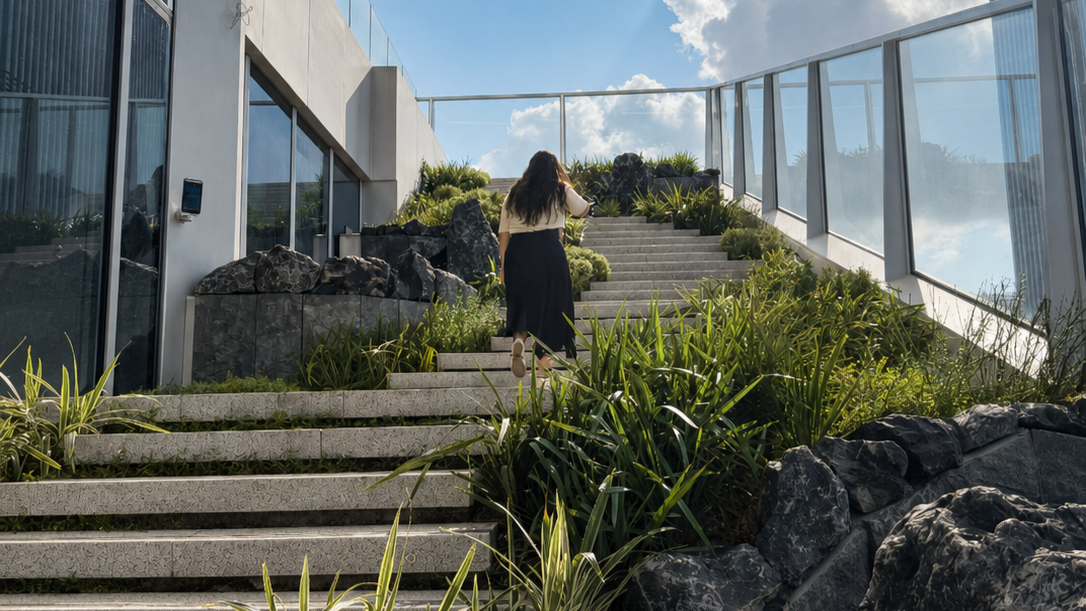
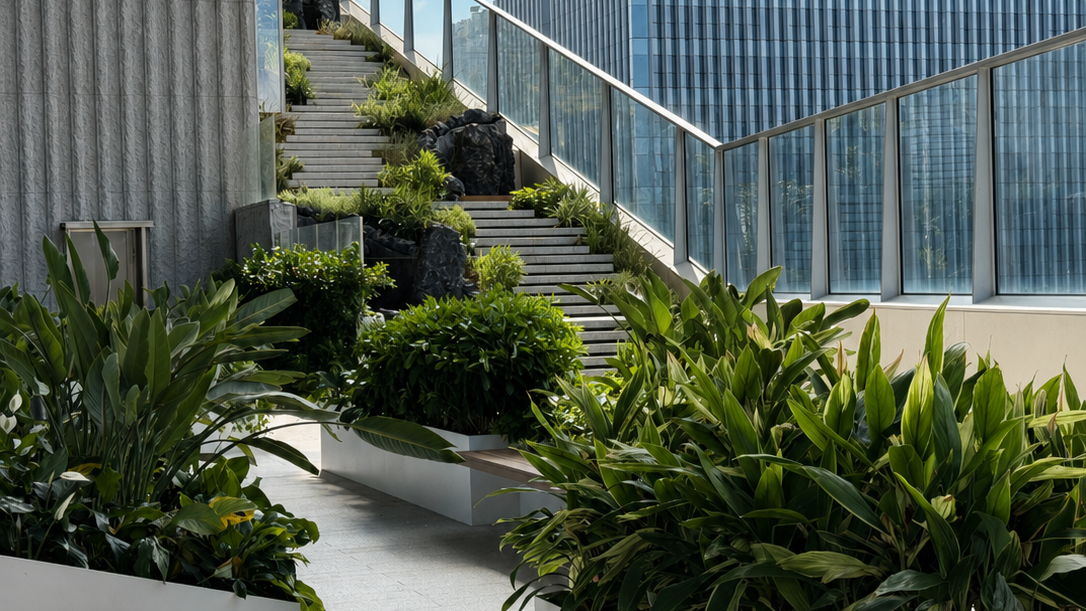
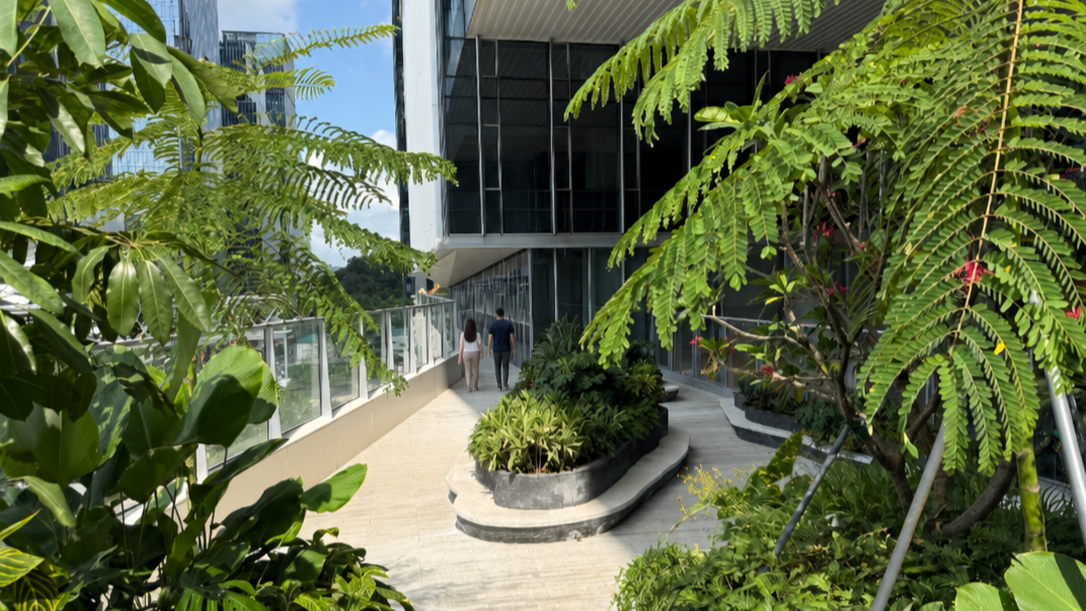
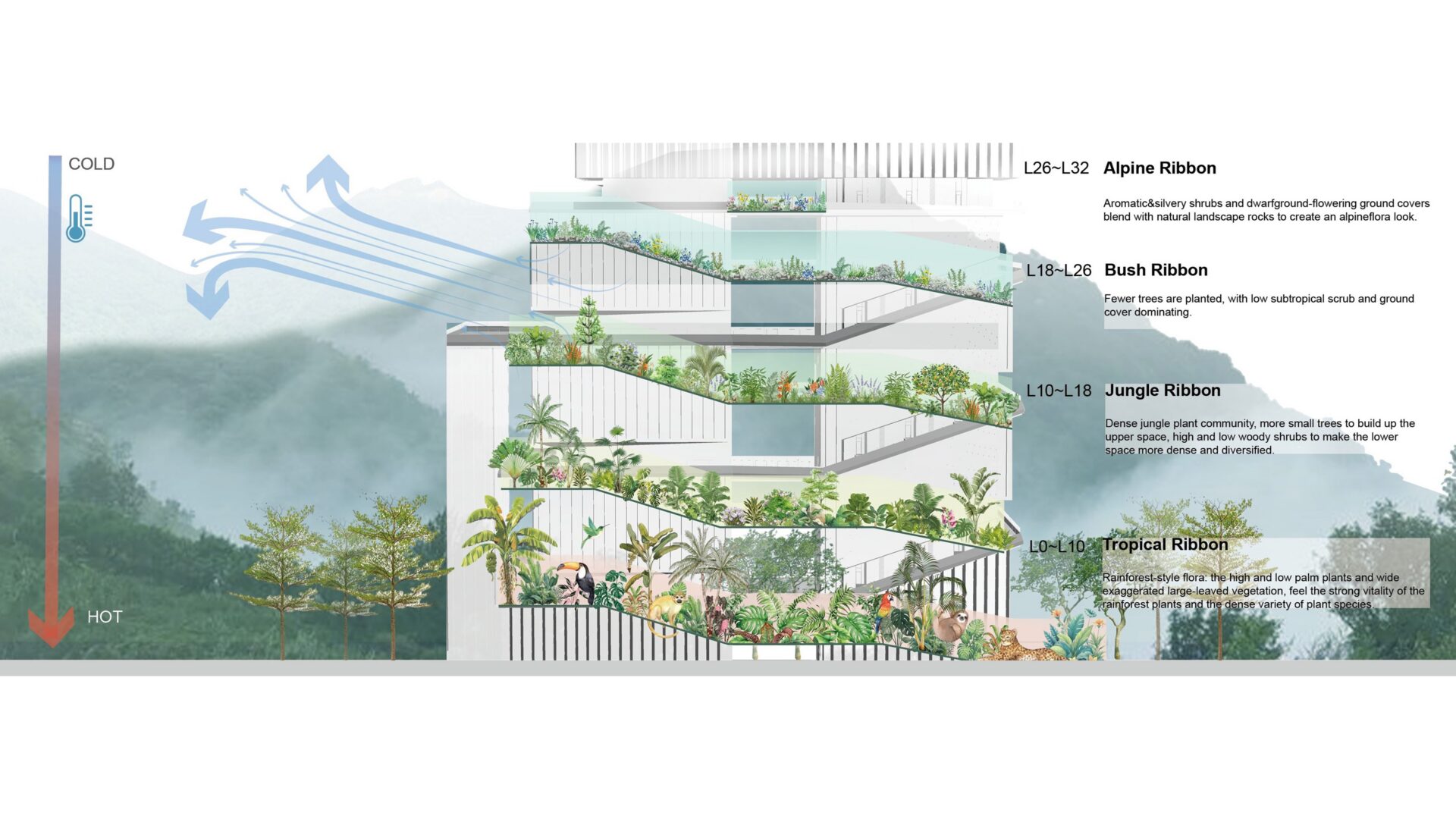
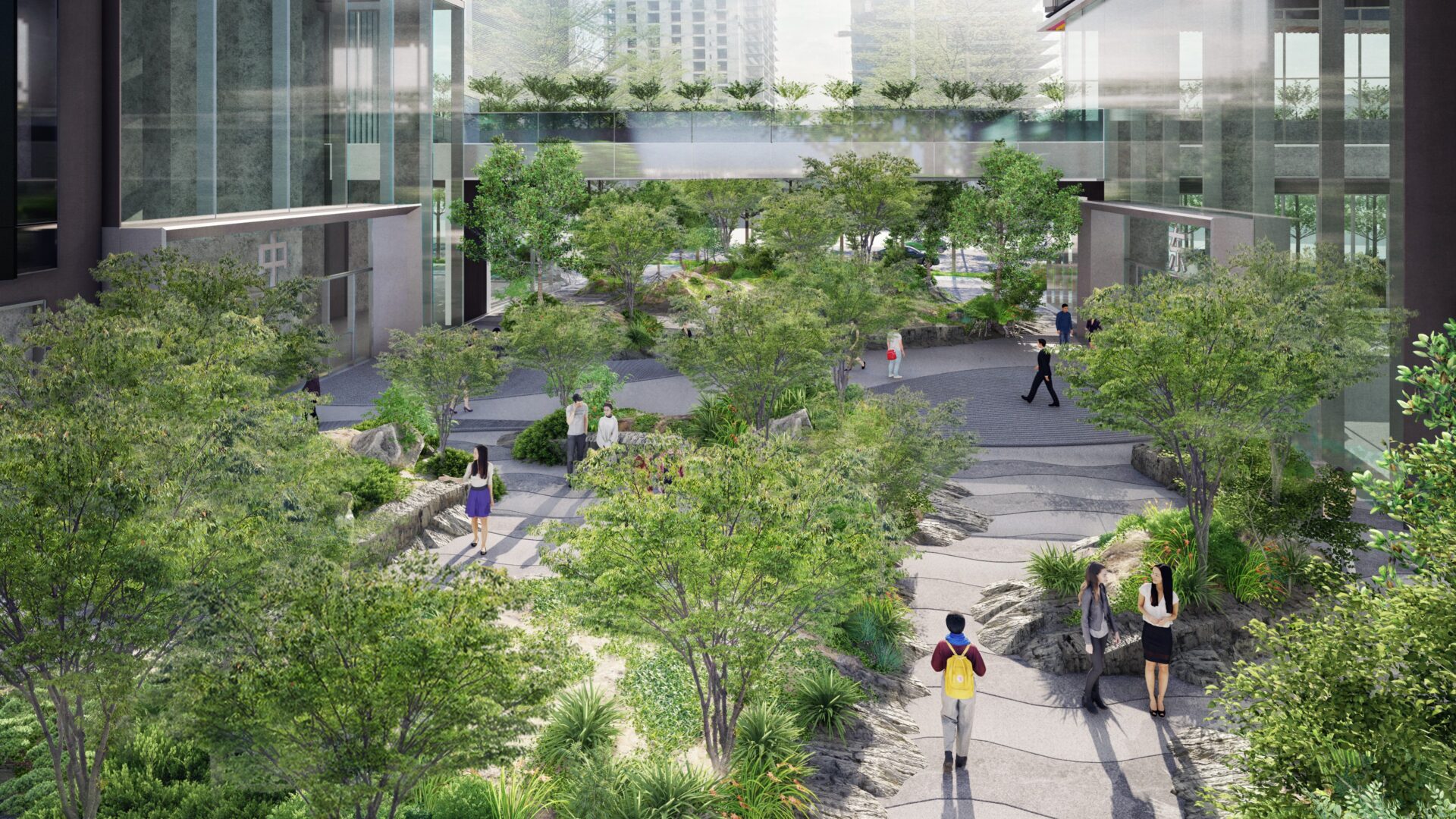
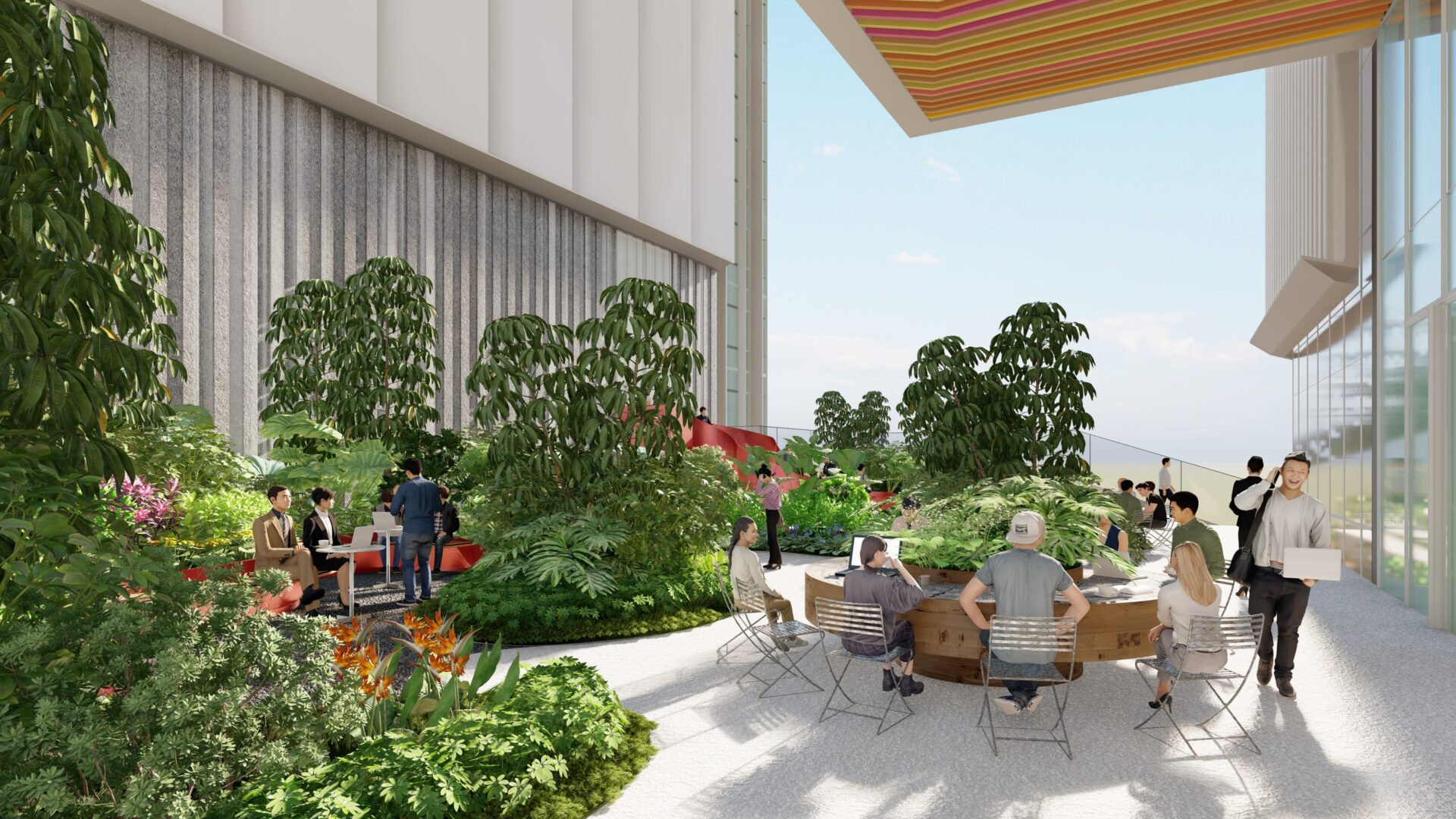
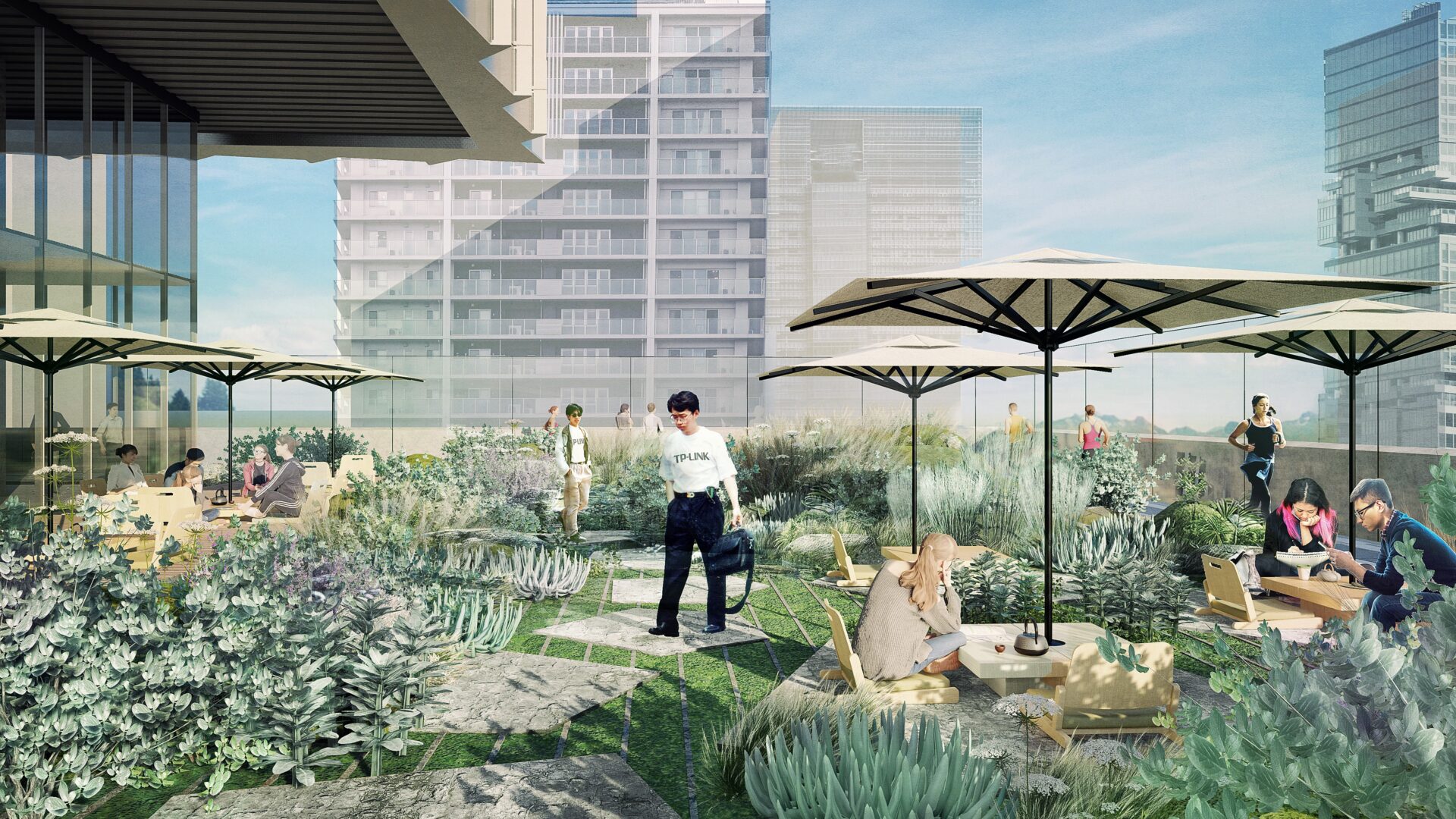
The proposal generates 18,700 square meters of landscape on a constrained 11,390-square-meter site, achieving a 1.64:1 landscape-to-site ratio. This expanded ecological surface redefines how limited urban land can perform. Ground level becomes a lush arrival landscape inspired by the tropical and coastal conditions of Shenzhen, beginning with the Coastal Reef Islands as a forest-like threshold into the campus. From there, the ribbon rises through densely planted stairways, shrub-framed terraces, collaboration platforms, quiet garden rooms, and active recreation spaces, eventually reaching the rooftop Breeze Tea Terrace, conceived as an alpine meadow-like retreat with panoramic views.
Restorative Circulation & Social Integration
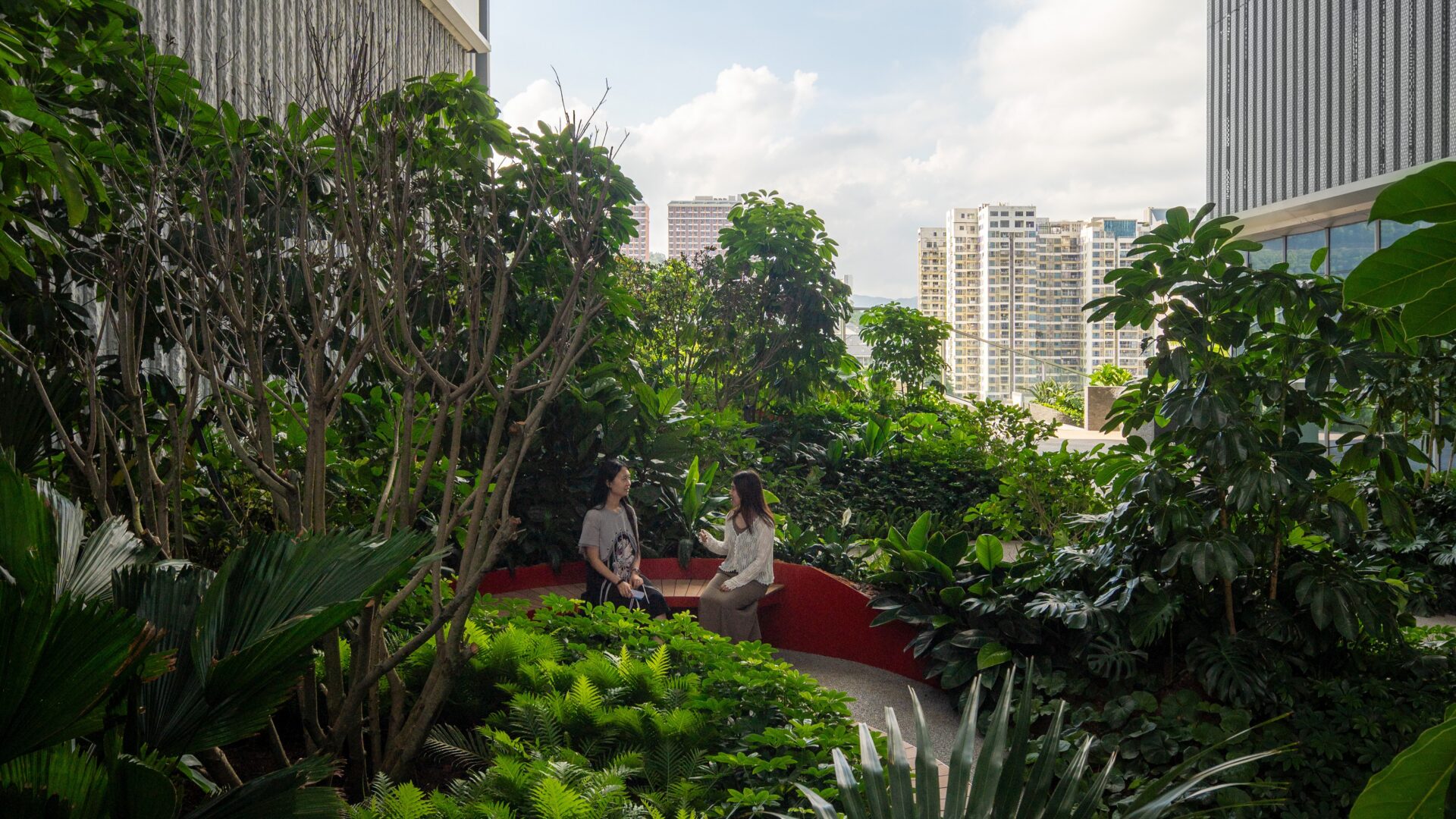
At the heart of the project is the idea that circulation can become restorative and social. Around 1,500 steps are embedded within the ribbon, with the full walk offering up to 25 minutes of continuous climbing—transforming everyday movement into a ritual of walking, encounter, and physical engagement. Through shade and vegetation, the project offers relief within the building itself, countering the “island effect” of traditional high-rises while encouraging informal encounters, cross-team exchange, and shared occupation across different heights.
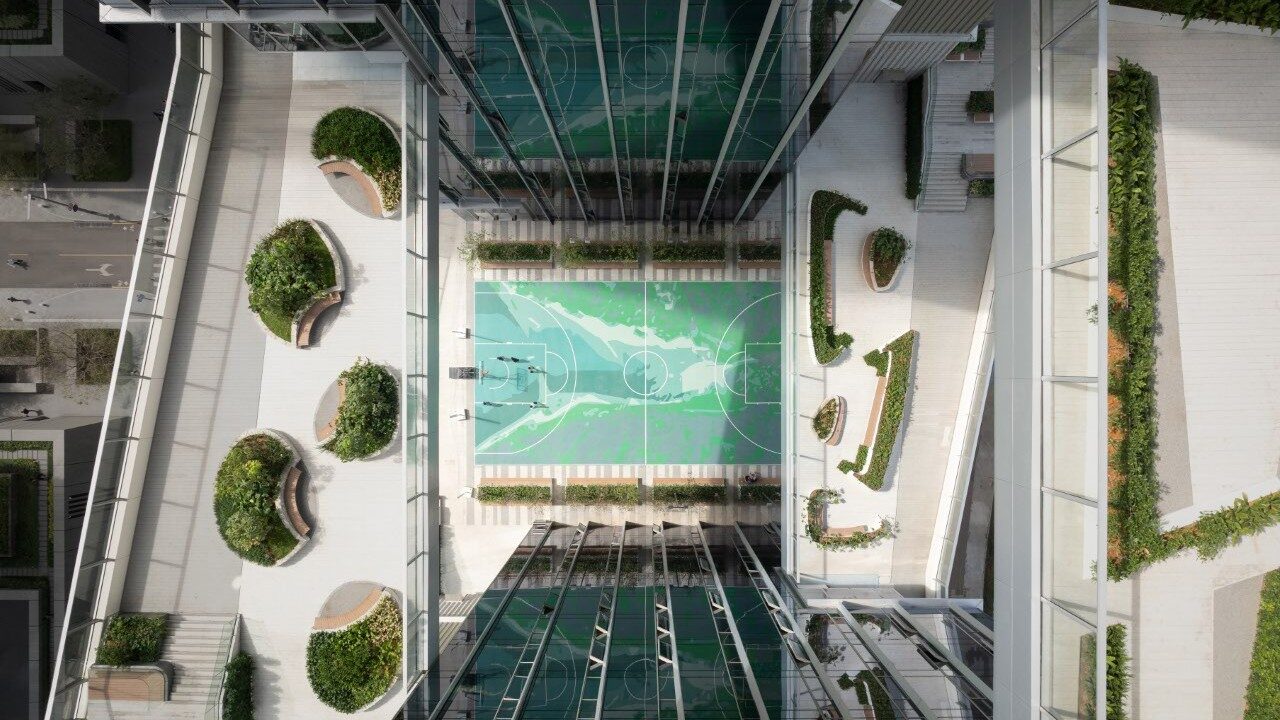
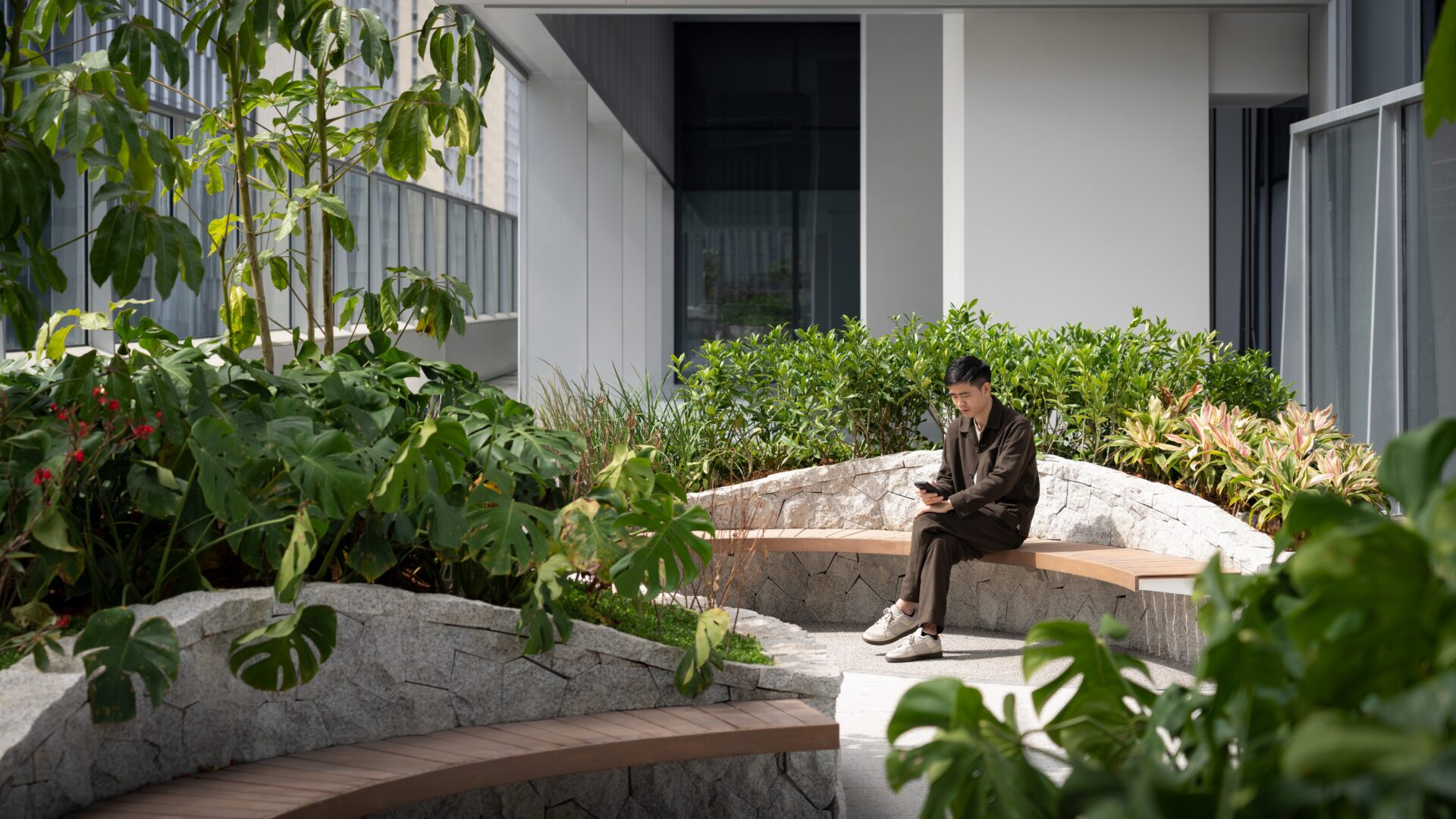
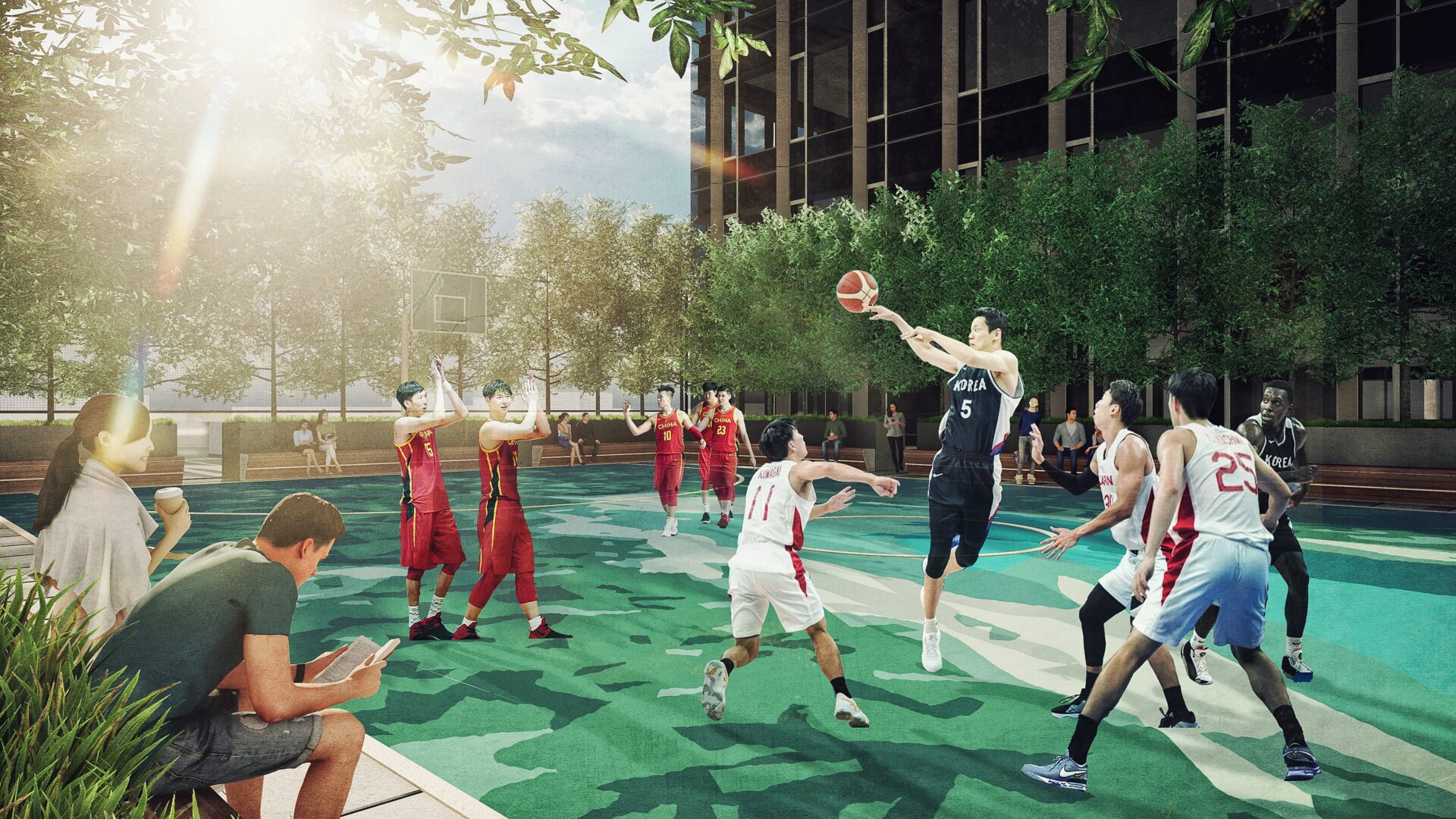
The landscape system includes sheltered arrival gardens, ecological stairways, collaboration platforms, quiet rooftop retreats, a basketball court, and a dramatic sky half-court suspended within the vertical journey. These active spaces extend landscape beyond ecology and circulation, forming vertical social infrastructure that supports wellness, recreation, and informal interaction. By embedding play high within the building, the project brings visible human energy into the skyline and reinforces the workplace as a living social environment.
Sustainability & Microclimatic Comfort
Sustainability is embedded in both spatial experience and environmental performance. Layered planting, canopy shade, structural wind protection, and topographic variation reduce heat gain, filter sunlight, and improve microclimatic comfort in Shenzhen’s hot and humid climate. Native and climate-adapted vegetation further strengthen resilience while reducing long-term maintenance demand.
A Replicable Workplace for Land-Scarce Cities
Beyond a single headquarter, TP-LINK Shenzhen establishes a replicable model for land-scarce cities: one in which landscape functions simultaneously as connective infrastructure, environmental intelligence, and cultural identity. As a prototype for the future workplace, it redefines the relationship between nature, architecture, and corporate life in the vertical city.
Location:
Shenzhen, China
Area:
18,700 m2
Client:
TP-LINK Technologies Co., Ltd.
Collaborators:
Architect: KPF
Landscape LDI: SED
Structural Engineer: ARUP
Façade Consultant: Inhabit
Architecture LDI: CCDI
Lighting Consultant: BPI
Photographer:
StudioSZ / Justin Szeremeta TLS Landscape Architecture
Awards:
Winner of 2026 WLA Award of Excellence
Completion:
2026